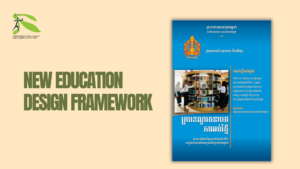
The framework described in this document includes guidelines for new design approaches based on the latest trends in educational architecture in different countries, as well as experiences from successful programs in Cambodia that focus on educational innovation, such as the initial initiatives of the Ministry of Education, Youth and Sport’s New Generation School Program.
The framework proposes new configurations for various educational spaces, including classrooms, libraries, science laboratories, and life-skills classrooms. The forms of the furniture are adapted from the traditional arrangements commonly used in Cambodian classrooms in order to promote new targeted approaches introduced under the education reform programs of the Ministry of Education, Youth and Sport, such as Problem-Based Learning (PBL), Project Work (PW), and Inquiry-Based Learning (IBL).
Changing the configuration of educational spaces in this way is based on the understanding that architecture and furniture design can have a significant influence on how children learn and how teachers teach. Indeed, numerous experimental studies have shown that the design of educational spaces can have a significant impact on learning. Therefore, the hope of the managers of the Upper Secondary Education Sector Development Program is that this education design framework can have a positive impact on the quality of education in the schools supported by the project.